Kính thưa Qúy Vị, Qúy NT và CH....
Ba tàu âm thầm, với tiền bạc sẳn có, đã và đang trở thành chủ nhân ông của nhiều đại công ty trên toàn thế giới...Mới nhất, sát nách của Thủ đô HTĐ, công ty Shuanghui International Holdings Ltd. ( một công ty sản xuất thịt lớn nhất của Trung cộng), đã đồng ý mua Công ty sản xuất thịt heo Smithfield Foods (công ty sản xuất thịt heo lớn nhất thế giới), có cơ sở tại Smithfield, Virginia, với giá 4.7 tỷ Mỹ kim...cộng thêm "phụ tùng" tất cả lên đến 7.1 tỷ Mỹ kim. Đây là lần đầu tiên, Trung cộng mua một công ty của Hoa Kỳ với giá cao như thế..
Phe ta tốt nhất ...ngay từ chuẩn bị tẩy chay tầu cộng là vừa..
bằng cách....
không dùng sản phảm của hãng Smithfield Foods nửa...
Thế thôi...
Làm gì được chúng bây giờ ???...
Xin mời Qúy Vị đọc bài viết của The Wall Street Journal dưới đây để tường...
Tôi cũng xin gởi Qúy Vị logos của một số sản phảm của Smithfield Foods để Qúy Vị cùng tẩy chay...
Trân trọng...
BMH
Washington, D.C
BMH
Washington, D.C

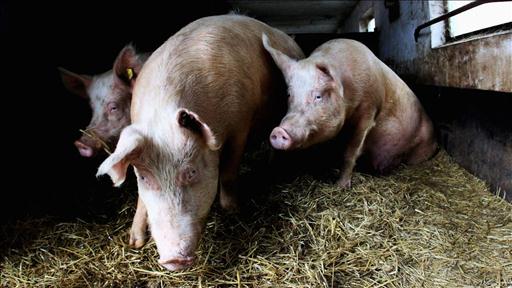


Analysts speculated Wednesday that Brasil Foods SA and Charoen Pokphand Foods Pcl, CPF.TH -2.52%known as CP Foods, could be suitors for the company.

—Cameron McWhirter, Shangguan
Zhoudong, William Mauldin, David Benoit, Isabella Steger and Corey Boles
contributed to this article.
China Makes Biggest U.S. Play
Asian Meat Giant Strikes $4.7 Billion Deal for Virginia's Smithfield Foods
By DANA MATTIOLI, DANA CIMILLUCA and DAVID KESMODEL
Chinese meat producer Shuanghui agreed to buy Smithfield
Foods for $4.7 billion, striking what would be the largest takeover of a U.S.
company by a Chinese buyer. Dana Cimilluca reports. Photo: AP.
China's largest meat processor struck a surprise $4.7
billion agreement to acquire Smithfield Foods Inc., SFD +0.61%a deal that would mark the biggest
Chinese takeover of an American company and underscores the Asian nation's
renewed determination to scoop up overseas assets.
Shuanghui International Holdings Ltd. agreed to pay $34
a share for Smithfield, the world's largest hog farmer and pork processor.
Including debt, the deal values the Smithfield, Va., company at $7.1
billion.
Acquisition Attempts From China
See other attempts by Chinese companies to buy some well-known U.S.
businesses.

People involved in the deal said Wednesday that the
purpose of the tie-up is to export more of Smithfield's output to feed rising
demand in China, the world's biggest pork market, and not to import Chinese meat
into the U.S.
The proposed deal marks the latest effort by a Chinese
company to strike a foreign acquisition aimed at securing access to resources
that can drive China's economy—the world's second largest. In the past, its
focus has largely fallen on the mining and oil industries and less on food.
With a $4.7 billion bid for U.S. pork processor
Smithfield Foods, China’s Shuanghui is attempting the biggest Chinese takeover
of a U.S. company. Ben Cavendar of China Market Research discusses why the deal
may boost China’s tainted pork industry.
The country and its companies have often been thwarted
in their quest to seal such deals—most notably oil company Cnooc Ltd.'s 0883.HK -0.29%effort in 2005 to buy Unocal Corp. for
$18.5 billion—amid fears that they could jeopardize U.S. national security and
other sensitivities as China becomes the U.S.'s chief global economic rival.
The Smithfield deal is far from guaranteed. In addition
to political concerns and fears surrounding Chinese food safety, a rival offer
could surface. Smithfield Chairman Joseph Luter said in an interview that other
bidders for the company might yet emerge. "Lots of people love us," he said.
"I'll leave it at that."
Related Video
MarketWatch's Laura Mandaro discusses the five largest
holdings from Berkshire Hathaway's most recent 13F filing in which at least one
insider has bought in the last three months. (Getty Images)
Chinese companies have gotten better at navigating the
delicate political and regulatory waters in the U.S.
Last year, Chinese buyers agreed to spend $11.57 billion
in 49 deals to acquire U.S. companies or stakes in U.S. firms, according to
Dealogic. The 2012 dollar volume was higher than the total from 2009 through
2011 combined. And with the Smithfield deal, spending so far this year is
stronger than last.
To succeed, many Chinese companies are going after
investments of less than $500 million and focusing on private companies or joint
ventures. But public companies, such as Smithfield, are also fair game
now.
"I'm sure all Chinese companies are watching this deal
closely," says Robert Profusek, a partner specializing in mergers and
acquisitions at Jones Day. "If it goes through, it might start to change the
perspective that the U.S. is not open for business to the Chinese," he says.
There were two other companies that were talking to
Smithfield around the same time as Shuanghui, according to a person familiar
with the matter who declined to name them. Smithfield can now continue to talk
to those two suitors, this person said. If one of them strikes a deal with the
company in the next 30 days or so, Smithfield could pay a $75 million breakup
fee; if such a deal comes later, the fee would be $175 million.
Analysts speculated Wednesday that Brasil Foods SA and Charoen Pokphand Foods Pcl, CPF.TH -2.52%known as CP Foods, could be suitors for the company.
CP Foods said Thursday in a statement that it had
"studied" a potential acquisition of Smithfield. The opportunity "came with a
very limited timeframe," CP Foods said, without elaborating, citing a
non-disclosure agreement. It congratulated Shuanghui on the deal.
Spokespeople for Brasil Foods couldn't be reached.
Brazilian food company JBS SA JBSS3.BR -1.87%looked at Smithfield, but it never got
as far as making a formal offer and doesn't intend to make a counteroffer, said
a person familiar with the company's thinking.
Shuanghui's offer was a 31% premium to Smithfield's
Tuesday closing price of $25.97 on the New York Stock Exchange. The company's
shares jumped 28% to close at $33.35 Wednesday following news of the deal, which
was first reported by The Wall Street Journal.
The U.S. meat industry offers an unusual opportunity for
China. It doesn't have the national security concerns of industries such as
telecommunications, but it is heavily consolidated among a small number of major
players, meaning that any U.S. rivals big enough to bid for Smithfield could
face antitrust hurdles.
Why China Wants the Deal
While the $4.7 billion deal will give the Chinese group a major foothold in
the U.S. food industry, the
bigger story might be bringing an American brand to China, where
food safety concerns are high and consumers place high levels of trust in
Western products. Read
more in Corporate Intelligence.
- Morgan Stanley to Provide $3 Billion to Help Finance Deal
- Heard on the Street: Don't Wait for Second Helpings at Smithfield
- Smithfield CEO Declares Victory
- Opposition to China-Smithfield Deal Seen as Muted
- How About a Smithfield Quid Pro Quo?
- Farm Trade Could Sway Approval of China Deal
- An Old Tidewater Town Thrust Into Spotlight
- 'China's No. 1 Butcher' Turns to U.S.
- Smithfield Chairman: Deal Is 'a Win for Everybody'
- The List: Top China-U.S. Deals
- The Goldman Sachs Connection
Smithfield and four other companies control 73% of the
U.S. pork-processing industry, according to a Smithfield investor presentation
last year. Smithfield owns an array of household names, including Armour,
Farmland and Healthy Ones, and gets the vast majority of its sales in the U.S.
China's food and agriculture industry has been racked by
health and hygiene scandals in recent years, highlighted in March when thousands
of dead pigs were found in rivers around Shanghai. Authorities blamed the
problem on irresponsible farmers.
In 2011, Chinese health inspectors discovered
clenbuterol—a food additive banned in China and the U.S.—in pork products from
Henan Shuanghui Investment &
Development Co., 000895.SZ -4.27%Shuanghui International's listed unit.
Clenbuterol speeds muscle growth in pigs but can cause headaches, nausea and an
irregular heartbeat when consumed by humans. The company apologized on its
website and said it discontinued partnerships with producers using the
contaminant.
Smithfield and Shuanghui said they would submit the deal
voluntarily for review by the Committee on Foreign Investment in the U.S.
"We really believe this transaction doesn't have any
national security concerns," Smithfield CEO Larry Pope said in an interview
Wednesday. "In the end, I think CFIUS will see this as a positive, not a
negative," he said.
Sen. Chuck Grassley (R., Iowa), the top ranking
Republican on the Senate Judiciary Committee, said he would urge the Justice
Department to "take a close look at this agreement," voicing his concerns that
it could lead to higher prices for independent producers of pork and for
consumers at the grocery store.
Smithfield's Mr. Pope said the company will contact its
customers in coming days to get their reaction to the deal. "I'm sure there will
be concerns from some of our customers," he said.
During a conference call with analysts, Mr. Pope
stressed that the deal was about exporting more of Smithfield's meat—to China
and elsewhere in Asia—and not importing Chinese pork. Currently, about 25% of
Smithfield's exports are to China.
From the Archives
The United Food and Commercial Workers International
Union, which represents about 16,000 Smithfield employees, signaled its support
for the deal, saying in a statement that it was "pleased" that current
Smithfield management would stay in place and that all collective bargaining
agreements would remain in place.
Shuanghui, also known as Shineway and based in Henan
province in central China, is the majority shareholder of China's largest meat
processor, Henan Shuanghui, which is publicly listed in the Chinese city of
Shenzhen. Unlike other Chinese companies that have loomed large on the world
stage in recent years, Shuanghui isn't state-controlled.
Shuanghui chairman Wan Long is sometimes called "China's
No. 1 Butcher" in the media because of the company's statements that it
slaughters more than 15 million pigs a year.
Like many of China's top business leaders, Mr. Wan has
cultivated political connections in Beijing. For the past 15 years he has been a
member of China's National People's Congress, a national-level rubber-stamp
legislature that meets once a year to formalize measures proposed by leaders of
the Chinese Communist Party.
Photos: What Does Smithfield Make?

Shuanghui gets much of its products from private
farmers. The practice has come under scrutiny in China amid a spate of food
scandals in which poorly regulated small farms played a role.
In interviews, Mr. Wan has said he wants to increase the
amount of pigs that come from company-owned farms.
In the news release confirming the deal, the companies
stressed they would "retain world-leading food safety and quality control
standards."
Smithfield, founded in 1936, has long been a big player
in selling hams and other fresh pork products for grocers' meat cases, but those
meats—often sold under the grocer's brand—carry lower profit margins than
packaged, branded meats. Under Mr. Pope, the company has expanded its
packaged-meats brands, such as Eckrich sausage and Smithfield bacon, to garner
higher profit margins.
But the company stumbled in 2008 and 2009, suffering
rare losses, as its hog farms faced a big run-up in grain costs as the
burgeoning U.S. ethanol industry led to higher prices for corn. Smithfield also
faced an industry wide glut of hogs, pressuring prices for pork.
The deal comes on the heels of agitation from a large
Smithfield shareholder, Continental Grain Co., to split the company up.
Continental Grain, which together with several related
parties recently owned roughly 6% of Smithfield, has said the board should
consider separating into three businesses: hog production; fresh pork and
packaged-meats production; and international pork operations. Smithfield says it
disagrees with Continental's recommendations.
Continental has urged Smithfield to add three new
directors to its board, among other suggestions, and its deadline for filing a
slate of directors is this week.
Mr. Pope said in the interview that he has had a
relationship with Shuanghui since long before Continental started pushing for
change.
Mr. Pope said on the conference call that Smithfield
first broached the idea of a deal with Shuanghui about four years ago and has
had discussions with the Chinese company since then, but "pricing has always
been an issue."
Mr. Pope, a longtime Smithfield executive, became CEO in
2006, filling the shoes of the company's longtime leader, Mr. Luter, who was the
architect of its strategy to become vertically integrated, snapping up hog farms
along with its pork-processing plants. Under Mr. Luter, the company's shares
soared over three decades.
Write to Dana Mattioli at dana.mattioli@wsj.com@wsj.com, Dana Cimilluca at dana.cimilluca@wsj.com@wsj.com and David Kesmodel at david.kesmodel@wsj.com
A version of this article appeared
May 30, 2013, on page A1 in the U.S. edition of The Wall Street Journal, with
the headline: China Makes Biggest U.S. Play.

Không có nhận xét nào:
Đăng nhận xét